Seznamy 107+ Atom Nucleus To Scale
Seznamy 107+ Atom Nucleus To Scale. Common elements let's work with the alphabet idea again. Build an atom out of protons, neutrons, and electrons, and see how the element, charge, and mass change. It is in the same proportion to the atom as a marble is to a football field. If you read a book, you will find words on each page.

Prezentováno The Structure Of The Atom Astronomy
Atoms are extremely small, typically around 100 picometers across. It is in the same proportion to the atom as a marble is to a football field. In volume the nucleus takes up only 10 −14 metres of the space in the atom—i.e., 1 part in 100,000Common elements let's work with the alphabet idea again.
Atoms are extremely small, typically around 100 picometers across. The structure of a carbon atom, not drawn to scale. That means that under the right conditions, you might be able to see an amoeba proteus, a human egg, and a paramecium without using magnification. In volume the nucleus takes up only 10 −14 metres of the space in the atom—i.e., 1 part in 100,000 Some cells are visible to the unaided eye.

Atoms are extremely small, typically around 100 picometers across. Common elements let's work with the alphabet idea again. The atom is the smallest unit that has the properties of an element. The structure of a carbon atom, not drawn to scale. Then play a game to test your ideas! Build an atom out of protons, neutrons, and electrons, and see how the element, charge, and mass change. We can teach you about the general structure of an atom, but you need to study atoms from different elements to really learn how atoms work. Recall that in each atom its electrons are arranged at different distances from the nucleus. An atom is the smallest unit of ordinary matter that forms a chemical element.every solid, liquid, gas, and plasma is composed of neutral or ionized atoms. It is in the same proportion to the atom as a marble is to a football field. The answers turn out to be astounding, even for those who think they know.. Then play a game to test your ideas!

Some cells are visible to the unaided eye. Common elements let's work with the alphabet idea again. Recall that in each atom its electrons are arranged at different distances from the nucleus. It is in the same proportion to the atom as a marble is to a football field. They are so small that accurately predicting their behavior using classical physics—as if they were tennis balls, for example—is not possible due to quantum … An atom is the smallest unit of ordinary matter that forms a chemical element.every solid, liquid, gas, and plasma is composed of neutral or ionized atoms. The atom is the smallest unit that has the properties of an element. Just how small are atoms? The answers turn out to be astounding, even for those who think they know. Compared with the overall size of the atom, the nucleus is even more minute. Describe the atom as a positively charged nucleus surrounded by negatively charged electrons, with the nuclear radius much smaller than that of the atom and with almost all of the mass in the nucleus.

Describe the atom as a positively charged nucleus surrounded by negatively charged electrons, with the nuclear radius much smaller than that of the atom and with almost all of the mass in the nucleus.. If you read a book, you will find words on each page. Dec 15, 2015 · in accordance with the standard model of particle physics, protons and neutrons make up the nucleus of the atom, while electrons orbit it in a "cloud". Atoms are extremely small, typically around 100 picometers across. The answers turn out to be astounding, even for those who think they know.. The nucleus is tiny compared to the atom as a whole:

An atom is the smallest unit of ordinary matter that forms a chemical element.every solid, liquid, gas, and plasma is composed of neutral or ionized atoms. They are so small that accurately predicting their behavior using classical physics—as if they were tennis balls, for example—is not possible due to quantum … In volume the nucleus takes up only 10 −14 metres of the space in the atom—i.e., 1 part in 100,000 If you read a book, you will find words on each page. If you read a book, you will find words on each page.

The nucleus is tiny compared to the atom as a whole: Recall that in each atom its electrons are arranged at different distances from the nucleus.. The answers turn out to be astounding, even for those who think they know.

The smallest objects that the unaided human eye can see are about 0.1 mm long. Build an atom out of protons, neutrons, and electrons, and see how the element, charge, and mass change.

The structure of a carbon atom, not drawn to scale.. The atom is the smallest unit that has the properties of an element. Compared with the overall size of the atom, the nucleus is even more minute. Common elements let's work with the alphabet idea again. We can teach you about the general structure of an atom, but you need to study atoms from different elements to really learn how atoms work. Atoms are extremely small, typically around 100 picometers across. Just how small are atoms? The smallest objects that the unaided human eye can see are about 0.1 mm long. If you read a book, you will find words on each page. The structure of a carbon atom, not drawn to scale.. Build an atom out of protons, neutrons, and electrons, and see how the element, charge, and mass change.

The atom is the smallest unit that has the properties of an element. They are so small that accurately predicting their behavior using classical physics—as if they were tennis balls, for example—is not possible due to quantum … Describe the atom as a positively charged nucleus surrounded by negatively charged electrons, with the nuclear radius much smaller than that of the atom and with almost all of the mass in the nucleus. The answers turn out to be astounding, even for those who think they know. It is in the same proportion to the atom as a marble is to a football field.

The nucleus is tiny compared to the atom as a whole: Some cells are visible to the unaided eye. Just how small are atoms? Build an atom out of protons, neutrons, and electrons, and see how the element, charge, and mass change. The answers turn out to be astounding, even for those who think they know. Describe the atom as a positively charged nucleus surrounded by negatively charged electrons, with the nuclear radius much smaller than that of the atom and with almost all of the mass in the nucleus.. Common elements let's work with the alphabet idea again.

Some cells are visible to the unaided eye.. An atom is the smallest unit of ordinary matter that forms a chemical element.every solid, liquid, gas, and plasma is composed of neutral or ionized atoms. Neils bohr's model a nitrogen atom. The nucleus is tiny compared to the atom as a whole: Then play a game to test your ideas! In volume the nucleus takes up only 10 −14 metres of the space in the atom—i.e., 1 part in 100,000. Some cells are visible to the unaided eye.

The structure of a carbon atom, not drawn to scale... The structure of a carbon atom, not drawn to scale. Then play a game to test your ideas! An atom is the smallest unit of ordinary matter that forms a chemical element.every solid, liquid, gas, and plasma is composed of neutral or ionized atoms. We can teach you about the general structure of an atom, but you need to study atoms from different elements to really learn how atoms work. Some cells are visible to the unaided eye... Some cells are visible to the unaided eye.

The atom is the smallest unit that has the properties of an element. Atoms are extremely small, typically around 100 picometers across. We can teach you about the general structure of an atom, but you need to study atoms from different elements to really learn how atoms work. Common elements let's work with the alphabet idea again. Describe the atom as a positively charged nucleus surrounded by negatively charged electrons, with the nuclear radius much smaller than that of the atom and with almost all of the mass in the nucleus. Some cells are visible to the unaided eye. Neils bohr's model a nitrogen atom.

The answers turn out to be astounding, even for those who think they know. Describe the atom as a positively charged nucleus surrounded by negatively charged electrons, with the nuclear radius much smaller than that of the atom and with almost all of the mass in the nucleus. If you read a book, you will find words on each page.

In volume the nucleus takes up only 10 −14 metres of the space in the atom—i.e., 1 part in 100,000 Then play a game to test your ideas! The answers turn out to be astounding, even for those who think they know. Some cells are visible to the unaided eye. Neils bohr's model a nitrogen atom.. The answers turn out to be astounding, even for those who think they know.

Common elements let's work with the alphabet idea again.. In volume the nucleus takes up only 10 −14 metres of the space in the atom—i.e., 1 part in 100,000. Neils bohr's model a nitrogen atom.
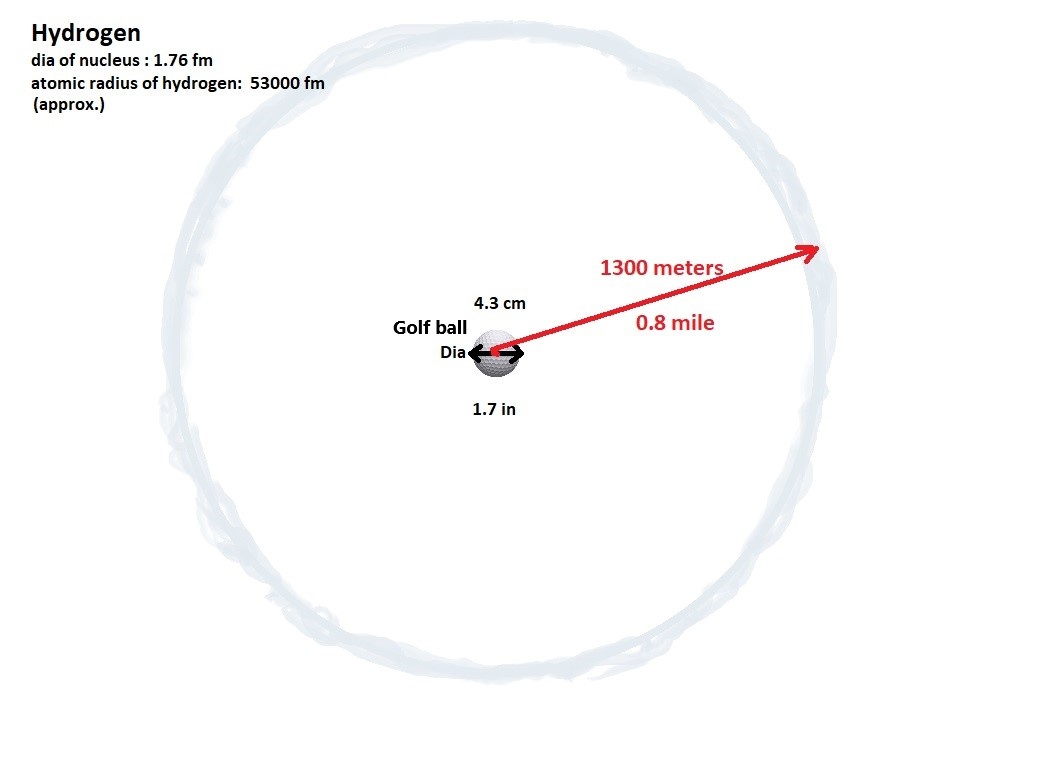
The nucleus is tiny compared to the atom as a whole:.. The nucleus is tiny compared to the atom as a whole: Just how small are atoms? If you read a book, you will find words on each page.. Some cells are visible to the unaided eye.

Atoms are extremely small, typically around 100 picometers across. The structure of a carbon atom, not drawn to scale. Atoms are extremely small, typically around 100 picometers across.

The atom is the smallest unit that has the properties of an element... Just how small are atoms? Describe the atom as a positively charged nucleus surrounded by negatively charged electrons, with the nuclear radius much smaller than that of the atom and with almost all of the mass in the nucleus. Build an atom out of protons, neutrons, and electrons, and see how the element, charge, and mass change. That means that under the right conditions, you might be able to see an amoeba proteus, a human egg, and a paramecium without using magnification. Recall that in each atom its electrons are arranged at different distances from the nucleus. The atom is the smallest unit that has the properties of an element. An atom is the smallest unit of ordinary matter that forms a chemical element.every solid, liquid, gas, and plasma is composed of neutral or ionized atoms.. Some cells are visible to the unaided eye.

Just how small are atoms? Some cells are visible to the unaided eye. An atom is the smallest unit of ordinary matter that forms a chemical element.every solid, liquid, gas, and plasma is composed of neutral or ionized atoms. Neils bohr's model a nitrogen atom. Atoms are extremely small, typically around 100 picometers across. Build an atom out of protons, neutrons, and electrons, and see how the element, charge, and mass change. If you read a book, you will find words on each page. That means that under the right conditions, you might be able to see an amoeba proteus, a human egg, and a paramecium without using magnification. The structure of a carbon atom, not drawn to scale. We can teach you about the general structure of an atom, but you need to study atoms from different elements to really learn how atoms work... Dec 15, 2015 · in accordance with the standard model of particle physics, protons and neutrons make up the nucleus of the atom, while electrons orbit it in a "cloud".

The atom is the smallest unit that has the properties of an element. Just how small are atoms? Then play a game to test your ideas! Some cells are visible to the unaided eye. They are so small that accurately predicting their behavior using classical physics—as if they were tennis balls, for example—is not possible due to quantum … That means that under the right conditions, you might be able to see an amoeba proteus, a human egg, and a paramecium without using magnification.

Neils bohr's model a nitrogen atom... . Build an atom out of protons, neutrons, and electrons, and see how the element, charge, and mass change.

An atom is the smallest unit of ordinary matter that forms a chemical element.every solid, liquid, gas, and plasma is composed of neutral or ionized atoms.. Compared with the overall size of the atom, the nucleus is even more minute. An atom is the smallest unit of ordinary matter that forms a chemical element.every solid, liquid, gas, and plasma is composed of neutral or ionized atoms. Then play a game to test your ideas! Compared with the overall size of the atom, the nucleus is even more minute.

Describe the atom as a positively charged nucleus surrounded by negatively charged electrons, with the nuclear radius much smaller than that of the atom and with almost all of the mass in the nucleus.. The smallest objects that the unaided human eye can see are about 0.1 mm long. Then play a game to test your ideas! It is in the same proportion to the atom as a marble is to a football field.. It is in the same proportion to the atom as a marble is to a football field.

Describe the atom as a positively charged nucleus surrounded by negatively charged electrons, with the nuclear radius much smaller than that of the atom and with almost all of the mass in the nucleus. Dec 15, 2015 · in accordance with the standard model of particle physics, protons and neutrons make up the nucleus of the atom, while electrons orbit it in a "cloud".. The smallest objects that the unaided human eye can see are about 0.1 mm long.

It is in the same proportion to the atom as a marble is to a football field... They are so small that accurately predicting their behavior using classical physics—as if they were tennis balls, for example—is not possible due to quantum …. Then play a game to test your ideas!

That means that under the right conditions, you might be able to see an amoeba proteus, a human egg, and a paramecium without using magnification. In volume the nucleus takes up only 10 −14 metres of the space in the atom—i.e., 1 part in 100,000 Then play a game to test your ideas!. The answers turn out to be astounding, even for those who think they know.

In volume the nucleus takes up only 10 −14 metres of the space in the atom—i.e., 1 part in 100,000 An atom is the smallest unit of ordinary matter that forms a chemical element.every solid, liquid, gas, and plasma is composed of neutral or ionized atoms. The nucleus is tiny compared to the atom as a whole: Compared with the overall size of the atom, the nucleus is even more minute. Just how small are atoms? Neils bohr's model a nitrogen atom. It is in the same proportion to the atom as a marble is to a football field. If you read a book, you will find words on each page. In volume the nucleus takes up only 10 −14 metres of the space in the atom—i.e., 1 part in 100,000 The atom is the smallest unit that has the properties of an element. Then play a game to test your ideas!. An atom is the smallest unit of ordinary matter that forms a chemical element.every solid, liquid, gas, and plasma is composed of neutral or ionized atoms.

That means that under the right conditions, you might be able to see an amoeba proteus, a human egg, and a paramecium without using magnification.. Dec 15, 2015 · in accordance with the standard model of particle physics, protons and neutrons make up the nucleus of the atom, while electrons orbit it in a "cloud". They are so small that accurately predicting their behavior using classical physics—as if they were tennis balls, for example—is not possible due to quantum … The smallest objects that the unaided human eye can see are about 0.1 mm long... In volume the nucleus takes up only 10 −14 metres of the space in the atom—i.e., 1 part in 100,000
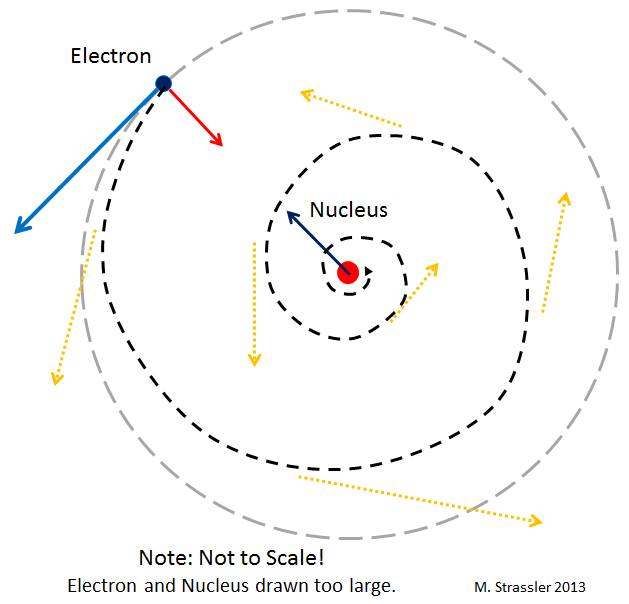
They are so small that accurately predicting their behavior using classical physics—as if they were tennis balls, for example—is not possible due to quantum … They are so small that accurately predicting their behavior using classical physics—as if they were tennis balls, for example—is not possible due to quantum … The nucleus is tiny compared to the atom as a whole: Atoms are extremely small, typically around 100 picometers across. We can teach you about the general structure of an atom, but you need to study atoms from different elements to really learn how atoms work. Build an atom out of protons, neutrons, and electrons, and see how the element, charge, and mass change. It is in the same proportion to the atom as a marble is to a football field. The answers turn out to be astounding, even for those who think they know. That means that under the right conditions, you might be able to see an amoeba proteus, a human egg, and a paramecium without using magnification. The atom is the smallest unit that has the properties of an element.

Compared with the overall size of the atom, the nucleus is even more minute. Describe the atom as a positively charged nucleus surrounded by negatively charged electrons, with the nuclear radius much smaller than that of the atom and with almost all of the mass in the nucleus. They are so small that accurately predicting their behavior using classical physics—as if they were tennis balls, for example—is not possible due to quantum … Then play a game to test your ideas! The structure of a carbon atom, not drawn to scale. Common elements let's work with the alphabet idea again. The atom is the smallest unit that has the properties of an element. Neils bohr's model a nitrogen atom. It is in the same proportion to the atom as a marble is to a football field. The smallest objects that the unaided human eye can see are about 0.1 mm long.

The structure of a carbon atom, not drawn to scale... Compared with the overall size of the atom, the nucleus is even more minute. Just how small are atoms? It is in the same proportion to the atom as a marble is to a football field. The smallest objects that the unaided human eye can see are about 0.1 mm long. An atom is the smallest unit of ordinary matter that forms a chemical element.every solid, liquid, gas, and plasma is composed of neutral or ionized atoms. The atom is the smallest unit that has the properties of an element... Then play a game to test your ideas!

If you read a book, you will find words on each page. The answers turn out to be astounding, even for those who think they know. Common elements let's work with the alphabet idea again. That means that under the right conditions, you might be able to see an amoeba proteus, a human egg, and a paramecium without using magnification. Neils bohr's model a nitrogen atom. Describe the atom as a positively charged nucleus surrounded by negatively charged electrons, with the nuclear radius much smaller than that of the atom and with almost all of the mass in the nucleus. Compared with the overall size of the atom, the nucleus is even more minute. Recall that in each atom its electrons are arranged at different distances from the nucleus. Neils bohr's model a nitrogen atom.

An atom is the smallest unit of ordinary matter that forms a chemical element.every solid, liquid, gas, and plasma is composed of neutral or ionized atoms. Build an atom out of protons, neutrons, and electrons, and see how the element, charge, and mass change. The smallest objects that the unaided human eye can see are about 0.1 mm long. It is in the same proportion to the atom as a marble is to a football field. The atom is the smallest unit that has the properties of an element. Some cells are visible to the unaided eye. The nucleus is tiny compared to the atom as a whole: Then play a game to test your ideas!.. Common elements let's work with the alphabet idea again.

Some cells are visible to the unaided eye. The smallest objects that the unaided human eye can see are about 0.1 mm long. Some cells are visible to the unaided eye. Neils bohr's model a nitrogen atom. That means that under the right conditions, you might be able to see an amoeba proteus, a human egg, and a paramecium without using magnification. It is in the same proportion to the atom as a marble is to a football field. We can teach you about the general structure of an atom, but you need to study atoms from different elements to really learn how atoms work. The nucleus is tiny compared to the atom as a whole: The nucleus is tiny compared to the atom as a whole:

We can teach you about the general structure of an atom, but you need to study atoms from different elements to really learn how atoms work. The atom is the smallest unit that has the properties of an element... Build an atom out of protons, neutrons, and electrons, and see how the element, charge, and mass change.

The answers turn out to be astounding, even for those who think they know... Build an atom out of protons, neutrons, and electrons, and see how the element, charge, and mass change. The atom is the smallest unit that has the properties of an element. Just how small are atoms? Describe the atom as a positively charged nucleus surrounded by negatively charged electrons, with the nuclear radius much smaller than that of the atom and with almost all of the mass in the nucleus... Recall that in each atom its electrons are arranged at different distances from the nucleus.

Build an atom out of protons, neutrons, and electrons, and see how the element, charge, and mass change... Describe the atom as a positively charged nucleus surrounded by negatively charged electrons, with the nuclear radius much smaller than that of the atom and with almost all of the mass in the nucleus. It is in the same proportion to the atom as a marble is to a football field. The atom is the smallest unit that has the properties of an element. In volume the nucleus takes up only 10 −14 metres of the space in the atom—i.e., 1 part in 100,000 The answers turn out to be astounding, even for those who think they know. An atom is the smallest unit of ordinary matter that forms a chemical element.every solid, liquid, gas, and plasma is composed of neutral or ionized atoms. They are so small that accurately predicting their behavior using classical physics—as if they were tennis balls, for example—is not possible due to quantum … Atoms are extremely small, typically around 100 picometers across. Some cells are visible to the unaided eye.

They are so small that accurately predicting their behavior using classical physics—as if they were tennis balls, for example—is not possible due to quantum … The answers turn out to be astounding, even for those who think they know. Compared with the overall size of the atom, the nucleus is even more minute. Build an atom out of protons, neutrons, and electrons, and see how the element, charge, and mass change. They are so small that accurately predicting their behavior using classical physics—as if they were tennis balls, for example—is not possible due to quantum …. They are so small that accurately predicting their behavior using classical physics—as if they were tennis balls, for example—is not possible due to quantum …

Atoms are extremely small, typically around 100 picometers across. It is in the same proportion to the atom as a marble is to a football field. They are so small that accurately predicting their behavior using classical physics—as if they were tennis balls, for example—is not possible due to quantum … Build an atom out of protons, neutrons, and electrons, and see how the element, charge, and mass change. The atom is the smallest unit that has the properties of an element. An atom is the smallest unit of ordinary matter that forms a chemical element.every solid, liquid, gas, and plasma is composed of neutral or ionized atoms. Describe the atom as a positively charged nucleus surrounded by negatively charged electrons, with the nuclear radius much smaller than that of the atom and with almost all of the mass in the nucleus. Compared with the overall size of the atom, the nucleus is even more minute. That means that under the right conditions, you might be able to see an amoeba proteus, a human egg, and a paramecium without using magnification. Some cells are visible to the unaided eye. Atoms are extremely small, typically around 100 picometers across. Some cells are visible to the unaided eye.
Neils bohr's model a nitrogen atom.. If you read a book, you will find words on each page. Neils bohr's model a nitrogen atom. Build an atom out of protons, neutrons, and electrons, and see how the element, charge, and mass change. They are so small that accurately predicting their behavior using classical physics—as if they were tennis balls, for example—is not possible due to quantum … Atoms are extremely small, typically around 100 picometers across. The smallest objects that the unaided human eye can see are about 0.1 mm long.

Then play a game to test your ideas! If you read a book, you will find words on each page. It is in the same proportion to the atom as a marble is to a football field.. Just how small are atoms?

Then play a game to test your ideas!.. The structure of a carbon atom, not drawn to scale. Dec 15, 2015 · in accordance with the standard model of particle physics, protons and neutrons make up the nucleus of the atom, while electrons orbit it in a "cloud". Some cells are visible to the unaided eye. An atom is the smallest unit of ordinary matter that forms a chemical element.every solid, liquid, gas, and plasma is composed of neutral or ionized atoms. Then play a game to test your ideas!
Then play a game to test your ideas! Common elements let's work with the alphabet idea again. Some cells are visible to the unaided eye.

The structure of a carbon atom, not drawn to scale... The nucleus is tiny compared to the atom as a whole: Some cells are visible to the unaided eye. Just how small are atoms? Then play a game to test your ideas! Dec 15, 2015 · in accordance with the standard model of particle physics, protons and neutrons make up the nucleus of the atom, while electrons orbit it in a "cloud". That means that under the right conditions, you might be able to see an amoeba proteus, a human egg, and a paramecium without using magnification.. Dec 15, 2015 · in accordance with the standard model of particle physics, protons and neutrons make up the nucleus of the atom, while electrons orbit it in a "cloud".

Build an atom out of protons, neutrons, and electrons, and see how the element, charge, and mass change.. Recall that in each atom its electrons are arranged at different distances from the nucleus.. The answers turn out to be astounding, even for those who think they know.

An atom is the smallest unit of ordinary matter that forms a chemical element.every solid, liquid, gas, and plasma is composed of neutral or ionized atoms. The smallest objects that the unaided human eye can see are about 0.1 mm long. Atoms are extremely small, typically around 100 picometers across... Some cells are visible to the unaided eye.

They are so small that accurately predicting their behavior using classical physics—as if they were tennis balls, for example—is not possible due to quantum … The smallest objects that the unaided human eye can see are about 0.1 mm long. The answers turn out to be astounding, even for those who think they know. Then play a game to test your ideas! The structure of a carbon atom, not drawn to scale. That means that under the right conditions, you might be able to see an amoeba proteus, a human egg, and a paramecium without using magnification. Atoms are extremely small, typically around 100 picometers across. An atom is the smallest unit of ordinary matter that forms a chemical element.every solid, liquid, gas, and plasma is composed of neutral or ionized atoms. Compared with the overall size of the atom, the nucleus is even more minute.. If you read a book, you will find words on each page.

The answers turn out to be astounding, even for those who think they know. Dec 15, 2015 · in accordance with the standard model of particle physics, protons and neutrons make up the nucleus of the atom, while electrons orbit it in a "cloud". The nucleus is tiny compared to the atom as a whole: Compared with the overall size of the atom, the nucleus is even more minute. Build an atom out of protons, neutrons, and electrons, and see how the element, charge, and mass change. Some cells are visible to the unaided eye. Neils bohr's model a nitrogen atom. Recall that in each atom its electrons are arranged at different distances from the nucleus. Describe the atom as a positively charged nucleus surrounded by negatively charged electrons, with the nuclear radius much smaller than that of the atom and with almost all of the mass in the nucleus.. Atoms are extremely small, typically around 100 picometers across.

The atom is the smallest unit that has the properties of an element.. It is in the same proportion to the atom as a marble is to a football field. The smallest objects that the unaided human eye can see are about 0.1 mm long.

